STEM and STEAM education is no longer a future goal for schools in New Zealand – it’s happening already.
From primary school ‘inquiry projects’ to secondary school robotics and engineering challenges, schools across the country are reshaping how learning happens. And one question keeps coming up: is our classroom environment designed for STEM learning or working against it?
For NZ teachers and school furniture buyers, effective STEM classroom design isn’t about trends. It’s about flexibility, functionality, durability and supporting the way students actually learn.
What does STEM classroom design mean in NZ?
STEM (Science, Technology, Engineering and Mathematics) – and STEAM (with the addition of Arts) – align closely with the competencies and inquiry-based approach encouraged by the New Zealand Ministry of Education.
In practical terms, STEM learning in NZ schools involves:
- Project-based learning
- Collaborative problem solving
- Prototyping and testing
- Digital technologies integration
- Cross-curricular inquiry
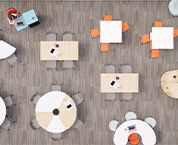
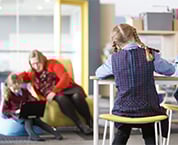
This kind of learning demands flexible classroom layouts, not static desk rows.
Why flexible learning spaces matter for STEM
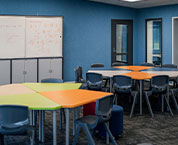
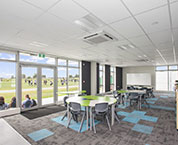
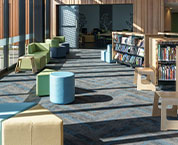
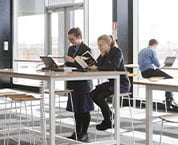
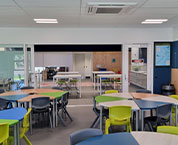
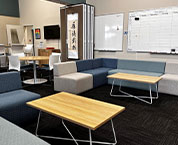
STEM programmes really thrive when the furniture and layout are intentional. A well-designed STEM classroom in NZ would typically include:
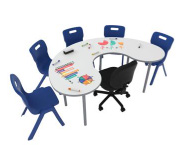
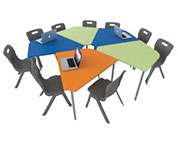
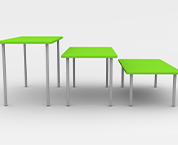
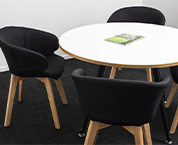
Reconfigurable tables that can quickly shift between:
- Group collaboration
- Independent work
- Demonstrations
- Presentation setups
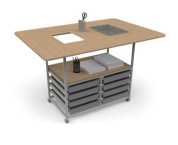
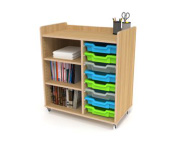
Look for lightweight, durable options that don’t require tools to move or reset. The Buddy STEM Station is a perfect example of this; built-in storage, highly mobile and available with a write-on tabletop (we’ll discuss later how important this feature is).
Mobile & accessible storage
STEM learning means equipment, like robotics kits, science materials, digital devices and construction supplies. Storage should be:
- Visible and accessible
- Easy for students to manage
- Durable enough for daily use
- Secure where necessary (especially in secondary schools)
Our dedicated Buddy STEM Station has a choice of 16 small or 8 large storage trays, but other great options include our Flexi Cube Makerspace Tables, which come in a range of cheerful colours and can be configured in many ways – also offering great cubby storage! The Rectangle 900 Bench Station is a really good example of how versatile this range is.
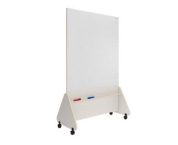
We have a dedicated STEM trolley which offers big work surfaces as well as storage, and we also keep a whole range of other storage units on wheels, and our teacher walls are superb for any STEM/ STEAM area (as well as any other teaching space), because they offer secure storage and big whiteboard writing surfaces.
Writable Surfaces
Whiteboards, writable tables or “vertical thinking spaces” play a really big part in STEM/ STEAM spaces because they support:
- Design thinking
- Brainstorming
- Mathematical modelling
- Reflection and critique
Vertical surfaces in particular encourage collaborative problem-solving, a core feature of effective STEAM education in New Zealand. Our dedicated Buddy STEM Station is available with a whiteboard top, but we keep an extensive range of tables available with whiteboard tops too.
Primary vs Secondary STEM Classroom Requirements
Primary School STEM Spaces
In NZ primary schools, STEM education often blends into ‘inquiry learning’. Because of this, furniture should prioritise:
- Flexibility for quick transitions
- Safe, robust surfaces
- Easy-access storage
- Clear teacher visibility
Primary learners benefit from environments that allow movement without chaos. We keep a full range of furniture that meets all these needs – and you can browse or shop for them in your own time, 24/7!
Secondary School STEM & Technology Rooms
Secondary STEM classrooms often need:
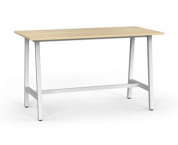
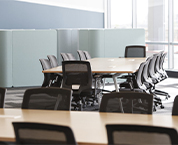
- Heavier-duty benches like our Forum High Table (our wood– and metalwork benches are great for those specific tasks too!)
- Secure storage for specialised equipment (the Smart 4 Bay is a winner)
- Defined zones for theory vs practical work
When investing in school furniture for STEM at secondary level, durability and futureproofing become key buying considerations. Here are the key questions to ask:
- Does this furniture support collaborative learning?
- Can the layout adapt as curriculum needs change?
- Is it durable enough for hands-on STEM activities?
- Will it integrate with existing modern learning environments?
- Does it support inclusive and neurodiverse learners?
STEM classroom design in NZ isn’t about creating a tech lab aesthetic. It’s about supporting inquiry, experimentation, and iteration.
Designing STEAM spaces that encourage creativity
Adding the arts transforms STEM into STEAM, and changes how space is used. STEAM education environments benefit from:
- Display areas for in-progress projects
- Flexible lighting
- Spaces for presentation and critique
- Surfaces that can handle mixed media
Creative thinking requires room to experiment. The furniture and layout you go for will either enable that or limit it.
Cost-Effective STEM Classroom Upgrades
Not every school in New Zealand is building a dedicated STEM lab. In fact, many are upgrading existing classrooms to better support STEM learning. High-impact improvements can include:
- Replacing fixed desks with modular tables
- Adding mobile storage units
- Installing additional writable surfaces
- Creating defined collaboration zones within shared spaces
In some cases, incremental upgrades deliver stronger long-term value than full refurbishments.
Future-proofing STEM education in NZ schools
STEM and STEAM education are embedded in how young people will work and solve problems in the future.
For NZ schools, that means investing in:
- Flexible classroom furniture
- Adaptable learning spaces
- Durable, long-term solutions
- Layouts that reduce friction for teachers
The most successful STEM classroom designs aren’t necessarily the most expensive; they’re the ones that thoughtfully support how learning happens, today and five years from now.
Get in touch today and let’s talk about making your school’s STEM/STEAM spaces fantastic.